
Maybe, after reading this blog, you want to travel to the Sandžak too (I sincerely hope so). Let me start by saying that I would certainly recommend travelling to the region: it’s a hidden gem, with stunning nature and lovely people. But, it’s also not the most easy region to travel to and through. So in this post I want to share my journey and some tips and tricks with you, so that your journey will be just a tad easier.
This post will be a bit different than the previous posts, since I won’t tell stories here, but rather give an overview of some practical information that can be useful when travelling to the Sandžak (for once the title isn’t clickbait 😉). Mind you, this overview won’t be the ‘complete’ or ‘ultimate’ overview: I myself travelled only for a good week through the region, so I wouldn’t call myself the ‘expert’. This post is more of a starting point if you’re planning to go to the Sandžak yourself.
My journey
Day 1: Flight to Sarajevo (Bosnia and Herzegovina) – bus ride from Sarajevo to Prijepolje (Serbia)
- Uvac border crossing (Bosnia and Herzegovina – Serbia)
Day 2: Visit of Prijepolje with small excursions to the Mileševa Monastery, the canyon of the Mileševka and the fortress of Mileševac
Day 3: Bus ride to Novi Pazar, with a short stop in Nova Varoš
Day 4: Visit of Novi Pazar
Day 5: Visit of Stari Ras, Sopoćani Monastery and Pešter Plateau (by bus and taxi)
- Interested in cycling on the plateau? Click here
Day 6: Ride from Pešter Plateau to Rožaje (Montenegro) (by taxi and bus)
- Špiljani border crossing (Serbia – Montenegro)
Day 7: Visit of Rožaje
Day 8: Ride to Bijelo Polje (by taxi) and visit of Bijelo Polje
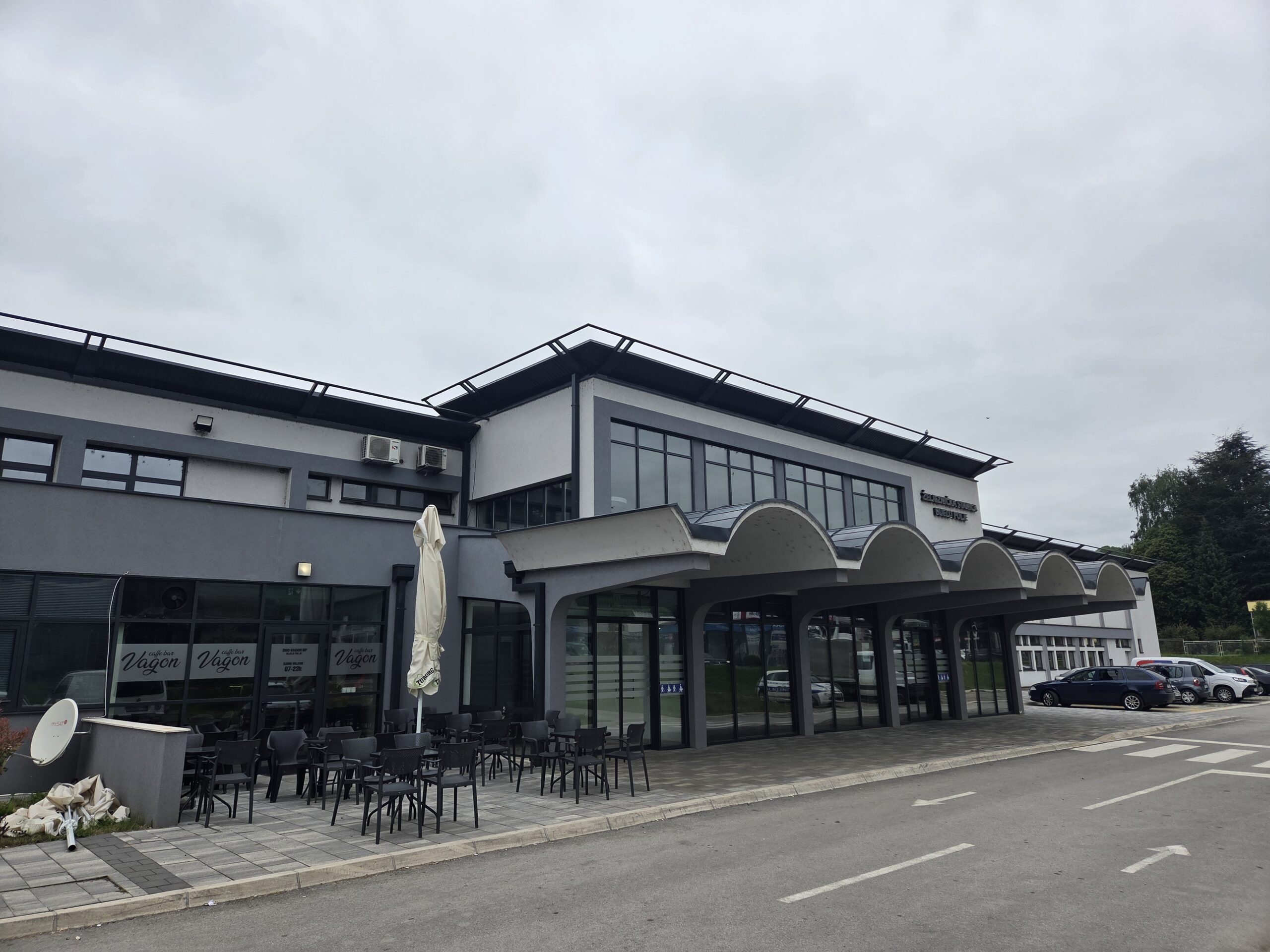
Day 9: Train ride from Bijelo Polje (stop: Lješnica) to the Airport of Podgorica (stop: Aerodrom)
This was my journey. You see that it’s quite ‘urban-focused’, with the only real stop in nature being the Pešter Plateau. If you travel to the region, I would certainly recommend spending more time in nature, besides the Pešter Plateau two suggestions here are:
- The Uvac Special Nature Reserve: I haven’t been here myself, but it’s called one of the ‘natural wonders of Serbia’, so I can imagine it’s pretty neat.
- The Accursed Mountains: the scary name of the mountain range between Montenegro, Kosovo and Albania, with some famous trails (like the Peaks of the Balkans). From the Sandžak side, Plav and Gusinje are good starting points to discover this mountains. I will probably publish some posts about this mountains in the future.
Check out my journey here:
Transport
Going to: I see tree main options to get to the Sandžak
- Fly to Belgrade (Serbia) and take a bus or a train to the region
- The train takes you to Priboj, Prijepolje or Bijelo Polje (in Montenegro), see the timetables here (only in Serbian unfortunately). You’re riding on the Belgrade-Bar line, which is considered one of the most beautiful railway lines in Europe (even by The Guardian).
- With the bus you have more options: Novi Pazar (most frequent connection), Prijepolje, Priboj, Sjenica, Nova Varoš … You can find timetables here.
- Fly to Podgorica (Montenegro) and take a bus or a train
- This train is also on the Belgrade-Bar line, but in the other direction. You can find timetables here (buying tickets online isn’t possible).
- By bus you once again have more options. Unfortunately I didn’t find an official website of the bus station of Podgorica, but the websites in the next part may help.
- Fly to Sarajevo (Bosnia and Herzegovina) and take a bus
- Limited options to Priboj, Sjenica, Novi Pazar, Pljevlja … I used this option, but it involved contacting the bus company directly, since the website of the bus station in Sarajevo doesn’t give the option to go to Prijepolje.
- You can find timetables here (only in Bosnian).
If you don’t speak the language, I would recommend the first two options, they will be the most straightforward and have frequent connections.
I would recommend using Google Flights to find the cheapest flights. I find it myself very complete (they don’t sponsor me to be clear) and you have the option to create a price alert (if you have a Gmail-account), so you’ll receive a notification when the price of your preferred flight changes.
Don’t get me wrong, I don’t necessarily want you to fly to the Sandžak. If you want to travel more ecologically, the bus will be the best option, since international trains towards Serbia and Montenegro are (at the moment) almost non-existent. If you want to find bus connections it’s probably best to check the website of the bus station you’re departing from or arriving to. Otherwise, websites like Omio or Rome2Rio may be a good starting point.

Going through: this is were it’s starts getting a bit complicated unfortunately
- Bus: the most frequent option, but using them can be quite frustrating: the buses are often old, drivers a bit reckless and timetabels difficult to find. I used tree different websites to find out which bus was running when, but in the end I found those sites not so reliable. My advice would be: use those websites as a starting point, but if possible ask for information at the bus station, or send a message to the bus company directly. A general rule of thumb can be: if a website shows a lot of connections (like 4, 5 or more) you’ll probably be good. If it shows only one or two connections it may be better to verify at the bus station or with the bus company. Below the sites I used:
- Polazak
- Balkanviator
- BusTicket4.me (mainly for Montenegro)
- In and around Novi Pazar the main bus company is Sandžaktrans. You can find (reliable) timetables here.
- Train: since there’s only one railway line that runs through the Sandžak (the Belgrade-Bar line), this won’t be a very useful way of transport. It covers only part of the region (Priboj, Prijepolje and Bijelo Polje) and if you want to cross the border you only have two trains a day, one of which runs during the night. Still, if you have the chance to take a train, I would recommend it (for the views and sometimes retro equipment). Tickets can be bought at the station.
- Taxi: frustrated by the difficulties to find reliable timetables for the bus, this became a frequently used option during my journey. You can find some options in Novi Pazar here. In general I would recommend using official taxis (often yellow, with a company name and a telephone number on the side), mainly because it’s very easy to contact them via WhatsApp (they normally respond very quickly), but I can’t say I was ripped of by ‘unnoficial’ taxis. I always paid a little less than 1 euro per kilometer, with the prices being lower for longer distances (for example, for the trip between Rožaje to Berane (30 km), I paid 20 euros).
- Car rental: the options in the Sandžak are very limited, you only have two rental agencies in Novi Pazar, but I can’t say anything about their reliability. Alternatively, you can rent a car in Belgrade or Podgorica and drive to the region. Check the rental conditions of your car before crossing the border though (it may be forbidden).
Accomodation
I will only recommend accomodations here that I liked and that (as far as I know) aren’t run by the mafia:
- Prijepolje: Apartman Planić, nice little apartment for two people with the friendliest owner.
- Novi Pazar: Hotel Vrbak, majestic hotel in the center of Novi Pazar, built over the Raška river. Not all rooms have airconditioning though.
- Pešter Plateau: Kamp Peštersko Polje, the accomodation is basic but the lovely owners, the food and the silence are more important.
I always recommend booking via WhatsApp or on the site of the hotel itself: it certainly won’t be more expensive than Booking.com and it probably gives you more flexibility (no cancellation fees for example). Even if you don’t speak the language, just give it a try: everybody knows Google Translate these days.

Food
Travelling to the Sandžak for the food? Good choice (unless you’re a vegetarian)! I’ll list my recommendations here below:
- Mahova Pekara, Prijepolje: a traditional bakery where you can try lepinja and ćevapi. Simple food, but it tastes just good.
- Doha Restaurant, Novi Pazar
- Kahva na žaru, Novi Pazar: coffee house in the garden of the Isa-Bey’s hammam, ask if you can take a look inside the hammam.
- Dva Jarana, Karajukića Bunari: small pub/restaurant on the Pešter Plateau, enjoy homemade food in a wooden house.
- Restoran Kero, Rožaje: restaurant owned by a Bosniak artist, so besides the food you’ll also enjoy the art.
- Slatko ćoše, Rožaje: pancakes, do I have to say more?
- Durmitor, Bijelo Polje: not been there myself, but recommended by a taxi driver. They seem to have quite the gun collection.
Eating in the Sandžak is a very nice experience and its one of these places where you can still have a meal for under 10 euros. Be aware though: alcohol won’t be available everywhere (although it’s not hard to find) and if you’re a vegetarian you’ll find it hard to find anything on the meat-oriented menus.
Other practicalities
Documents
- Check here which documents you need to travel to Serbia
- Check here which documents you need to travel to Montenegro
Money
- Serbia: dinar (RSD), check the current exchange rates here
- Montenegro: euro (EUR), check the current exchange rates here
- You can find ATM’s in all towns. Be sure to have some cash with you, because cards are not accepted everywhere (certainly on the countryside).
Safety
- Overall, the Sandžak felt very safe. I never felt threatened and I had the impression that most people were very friendly. The biggest risk is traffic: wearing a seatbelt is optional, speed limits are relative and using a phone behind the wheel is common.
- General emergency number: 112
Telecom
- I used an e-sim from Saily and was quite satisfied with it. If you stay for a longer period, a local sim will probably be cheaper. You can buy them at small kiosks you find in all towns. This site seems to give a good overview for Serbia and Montenegro.
- Telephone country codes: Serbia: +381; Montenegro: +387
Other
- Tap water: I never had problems drinking tap water, but be sure to ask the staff in your accomodation if it’s safe.
- Power plugs: check here if you need an adapter.
- Language: the people speak Serbian, Bosnian or Montenegrin, three variants of the same language (BCSM or Bosnian/Croatian/Serbian/Montenegrin). In my experience, few people know English, but I may be biased, since I speak the language myself. Some people may speak German, French or Russian too.